
Beyond Resilience: What Leaving a 15-Year Public Health Career Is Teaching Me
Recently, I made one of the biggest transitions of my professional life: I resigned after fifteen years of working in municipal public health.
For those who know me, you know that I LOVE public health through and through—specifically health equity and the social determinants of health. I've been a nurse for twenty years and spent fifteen of those years working across three public health units.
Public health has shaped so much of who I am professionally. And yet, I reached a point where I knew I needed to imagine what this work could look like outside of the systems where I had spent most of my career.
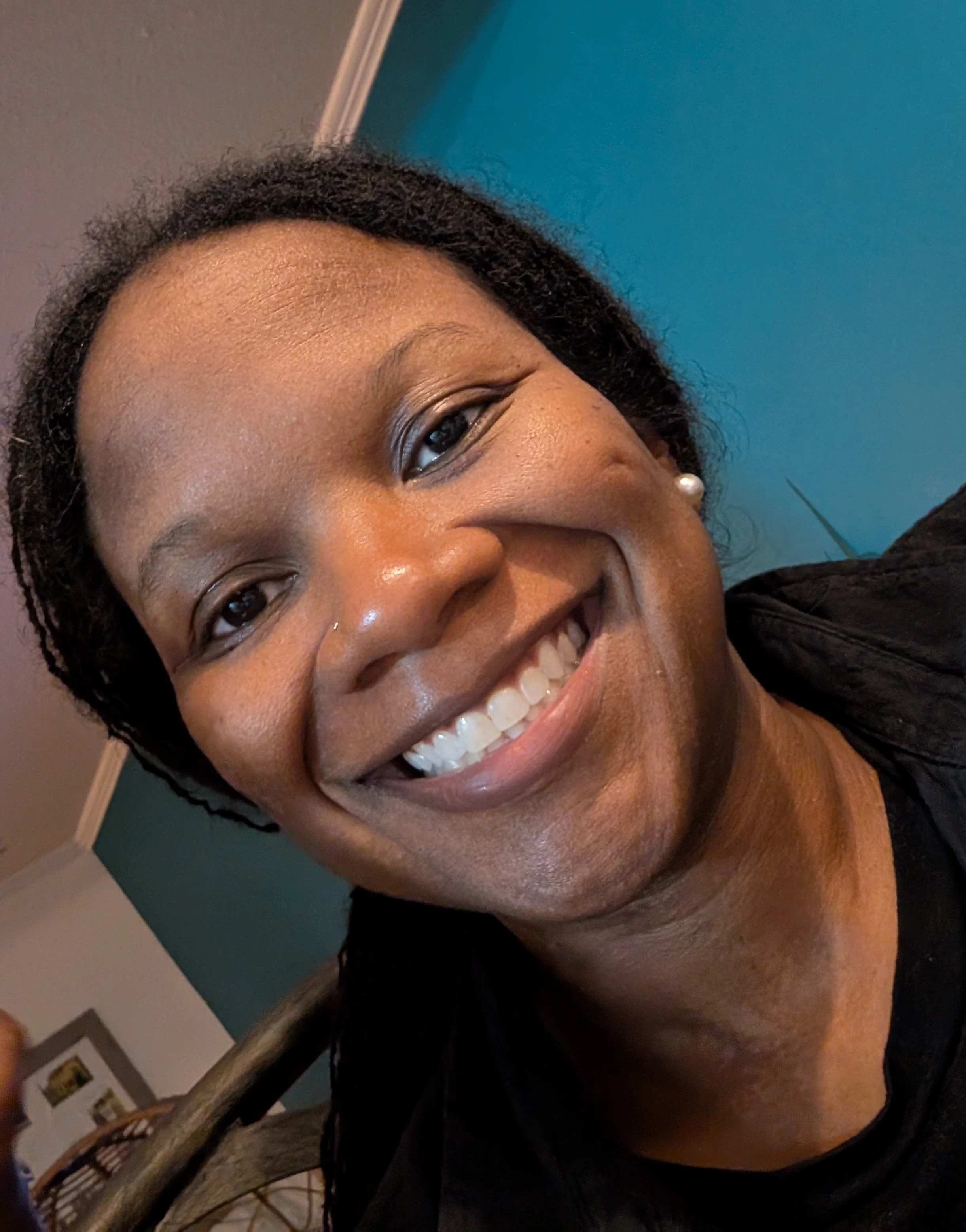
Excited for this new chapter!
Questioning What I Thought Security Looked Like
I've always had an entrepreneurial side (I've always loved a side hustle), but I was raised to believe that working for an established organization—preferably government—was how you created lasting change and built a secure life.
It took me a long time to question that belief and even longer to build a plan that allowed me to try something different.
The emotions leading up to leaving—and even afterward—have been a whirlwind: anxiety, uncertainty, excitement, relief, and hope.
Throughout my career, I've moved on when I felt I had learned what I was there to learn, but also when staying came at too great a cost to my professional growth, wellbeing, or psychological safety.
One of the biggest reasons I relaunched QueensConnected in 2025 was because I knew I wanted to work outside of a large organization, where I could own my voice and do the work I believed was most needed related to health equity, public health, and the social determinants of health.
I also began to realize something important:
I didn't have to work within a public health unit to do public health work.
There were other ways to use the knowledge, skills, and experience I had built over two decades as a nurse and public health professional—and perhaps even more freedom to decide how I wanted to use them.
When Leaving Feels Irresponsible
Even knowing all of that, this transition has been the hardest.
As a wife, a mother of two girls, and someone who has always taken pride in providing and caring for others, so much of my identity is tied to being responsible, dependable, and choosing security.
Walking away from a "stable" career has made me feel irresponsible at times. Before leaving, I wrestled with guilt, feelings of selfishness, and the fear that I was making the wrong decision.
But I've also come to realize that living authentically sometimes requires us to question the stories we've inherited.
Sometimes the very beliefs that once protected us can eventually begin to limit us.
What If Resilience Isn't Always About Staying?
We often talk about resilience as though staying, enduring, and pushing through are inherently virtuous.
I'm beginning to question that.
Sometimes resilience looks like staying.
Sometimes it means setting boundaries, asking for what we need, or finding ways to protect our wellbeing within the spaces we're in.
And sometimes, when we have the ability to do so, it means recognizing what something is costing us and giving ourselves permission to leave.
For Black and racialized women in particular, I think this conversation deserves more space.
So many of us have inherited expectations around strength, responsibility, caregiving, sacrifice, professionalism, family, success, and what it means to be a "good" woman. We learn how to survive and navigate systems that were not necessarily designed with us in mind.
But what happens when survival is no longer the only goal?
What are we allowed to choose when we move beyond simply enduring?
Taking This Conversation to UsNow 2026
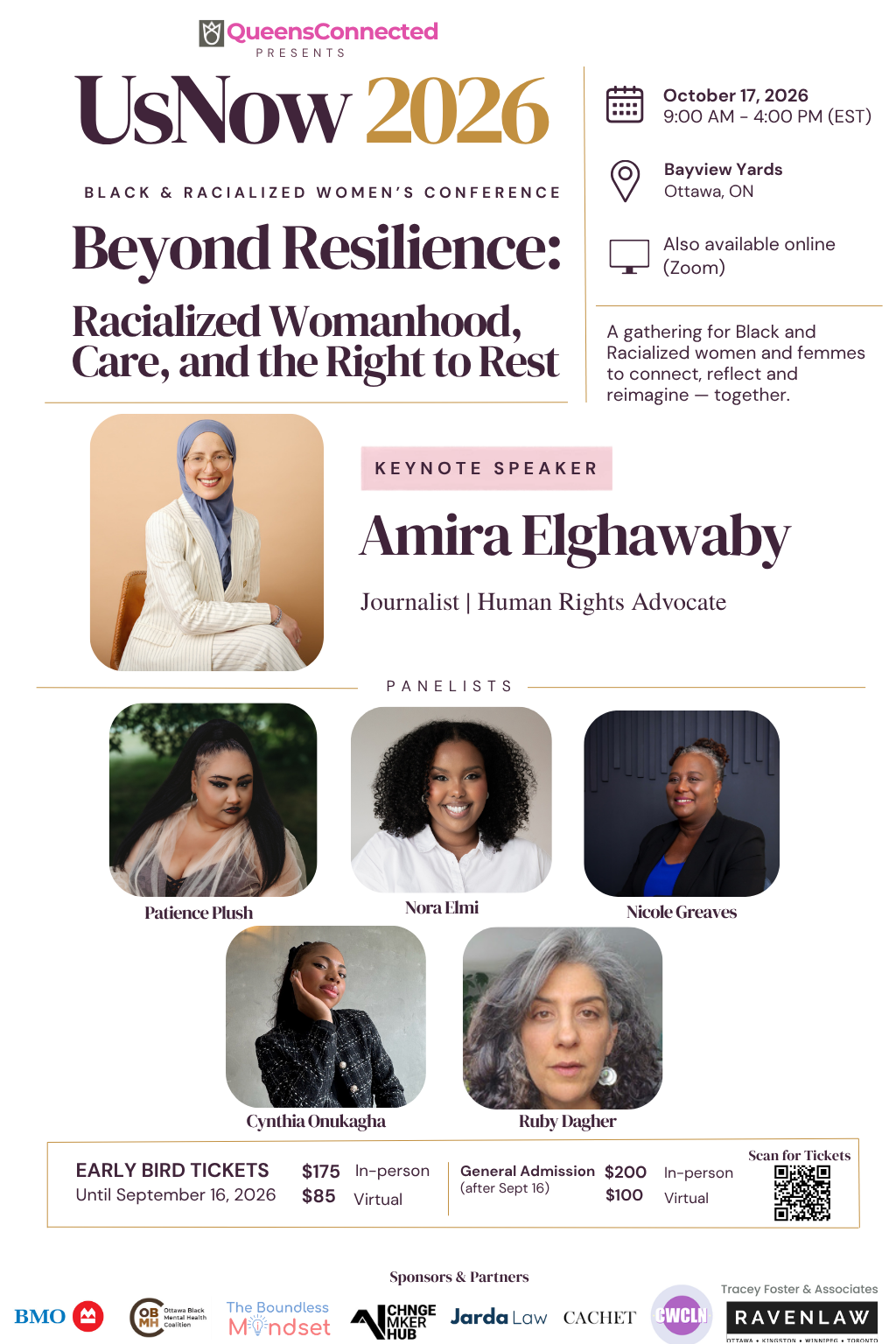
These are some of the questions at the heart of this year's UsNow 2026: Black & Racialized Women's Conference, taking place Saturday, October 17, 2026, at Bayview Yards in Ottawa and online.
Our theme this year is: Beyond Resilience: Racialized Womanhood, Care, and the Right to Rest
UsNow is a space for Black and racialized women to come together and have the conversations we don't always have the time—or the space—to have elsewhere.
Together, we'll explore the identities we've inherited, the expectations we've carried, and the stories we've been taught about who we are supposed to be.
We'll talk about strength and softness. Care and exhaustion. Family and responsibility. Boundaries and belonging. The expectations placed on racialized women—and what it might look like to redefine womanhood for ourselves.
And importantly, I don't want us to simply name what is difficult.
I want us to leave with new language, new perspectives, meaningful connections, and tangible ways to think differently about how we care for ourselves and one another.
UsNow 2026
Saturday, October 17, 2026
9:00 a.m.–4:00 p.m.
Bayview Yards, Ottawa + online
Black & racialized women/femmes
Early Bird registration ends September 16.
Making Room for What Comes Next
I have been building this next chapter for some time.
QueensConnected is now where I am putting my energy into creating spaces for community, supporting organizations to strengthen their equity practice, and continuing the public health and health equity work that has shaped so much of my career.
But I am also leaving room for new opportunities—and for whatever else may come my way.
I don't know exactly what this next chapter will look like.
And maybe part of going beyond resilience is learning that I don't have to know everything before I begin.